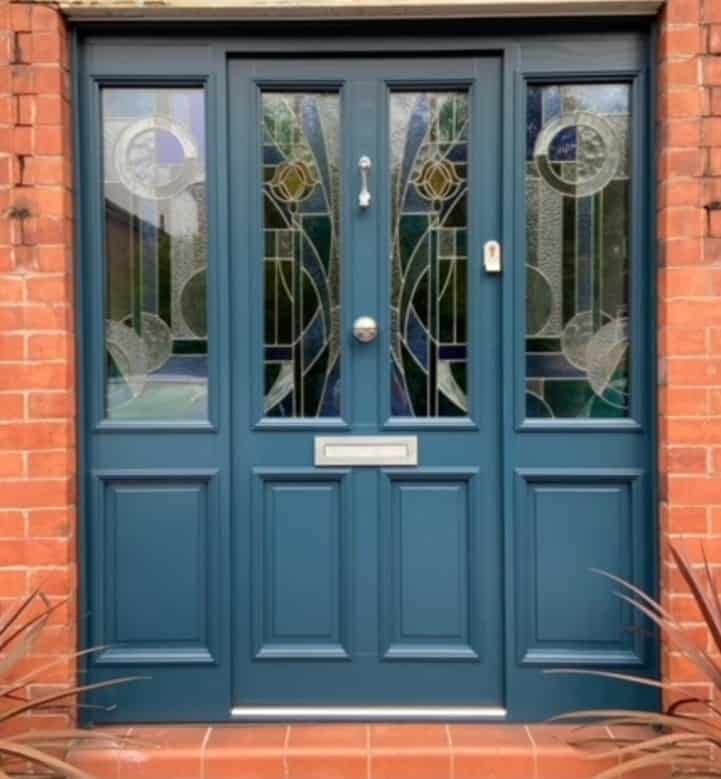
Entrance Door Designs: Making a Statement with Timber
The front door of your property does far more than simply provide a point of entry. It serves as the...
Read MoreLast Updated: 30 March 2026
When you’re planning to upgrade your home with new external doors, the decision between French doors vs bifold cost considerations can feel overwhelming. Both options offer stunning aesthetics and functional benefits, but they come with distinctly different price tags and long-term value propositions. At Reddish Joinery, we’ve spent over 60 years helping homeowners across Greater Manchester make informed choices about their timber door investments, and we’re here to demystify the costs involved.
French doors have remained a timeless choice for homeowners seeking elegance and practicality. These traditional doors feature a classic frame structure with one or multiple glass panes, typically arranged in a symmetrical pattern. But what exactly influences their pricing?
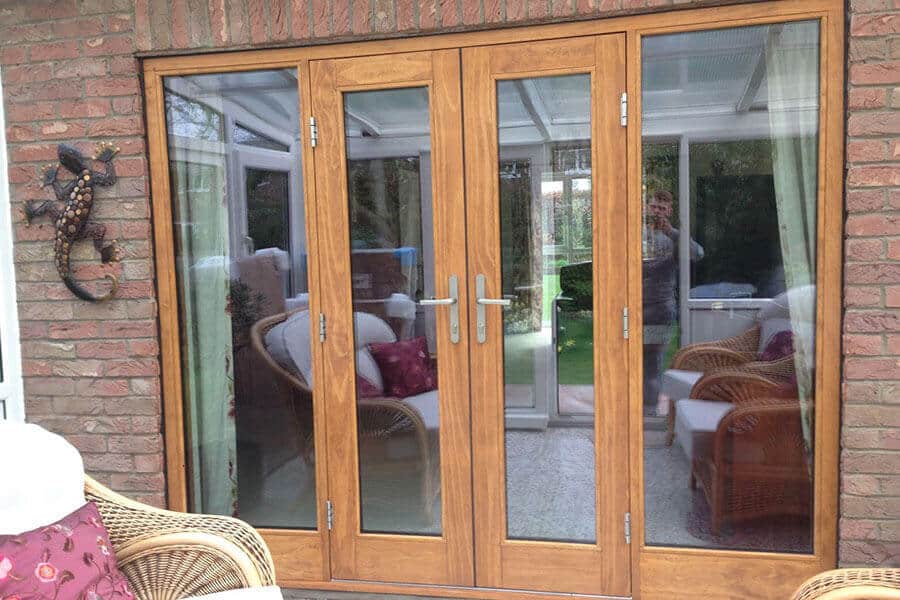
French doors consist of a frame, usually crafted from premium timber, with two doors than can be configured to open either inwards or outwards. This traditional design creates a sophisticated appearance while maintaining excellent functionality. The doors operate on a simple hinge mechanism, with one or both doors functioning as the opening element.
The straightforward mechanical design of French doors means they’re relatively simple to manufacture compared to other door styles. This simplicity, however, doesn’t diminish their aesthetic appeal or performance capabilities.
The timber selection significantly impacts the overall cost of your French doors. Premium hardwoods like oak, mahogany, and walnut command higher prices than softwoods such as pine or fir. The thickness of the timber frame, the quality of the glazing, and the type of hardware all contribute to the final expense.
At Reddish Joinery, we source the finest timber materials, ensuring durability and longevity in every French door we manufacture. The choice of wood species affects both the immediate cost and the maintenance requirements and lifespan of your doors.
While French doors are relatively straightforward to produce, precision remains paramount. The glass panes must be perfectly fitted, and the timber frame must be expertly joined to prevent warping or misalignment. Our craftspeople spend decades perfecting these skills, ensuring every set of French doors meets our exacting standards.
The glazing process is labour-intensive, particularly if you opt for decorative glazing patterns or specialist glass options like toughened or laminated panes. However, compared to bifold doors, the manufacturing process is considerably less complex, which translates to lower production costs.
Bifold door systems represent a modern evolution in door design, offering superior functionality and a contemporary aesthetic. However, this increased sophistication comes with corresponding cost implications.
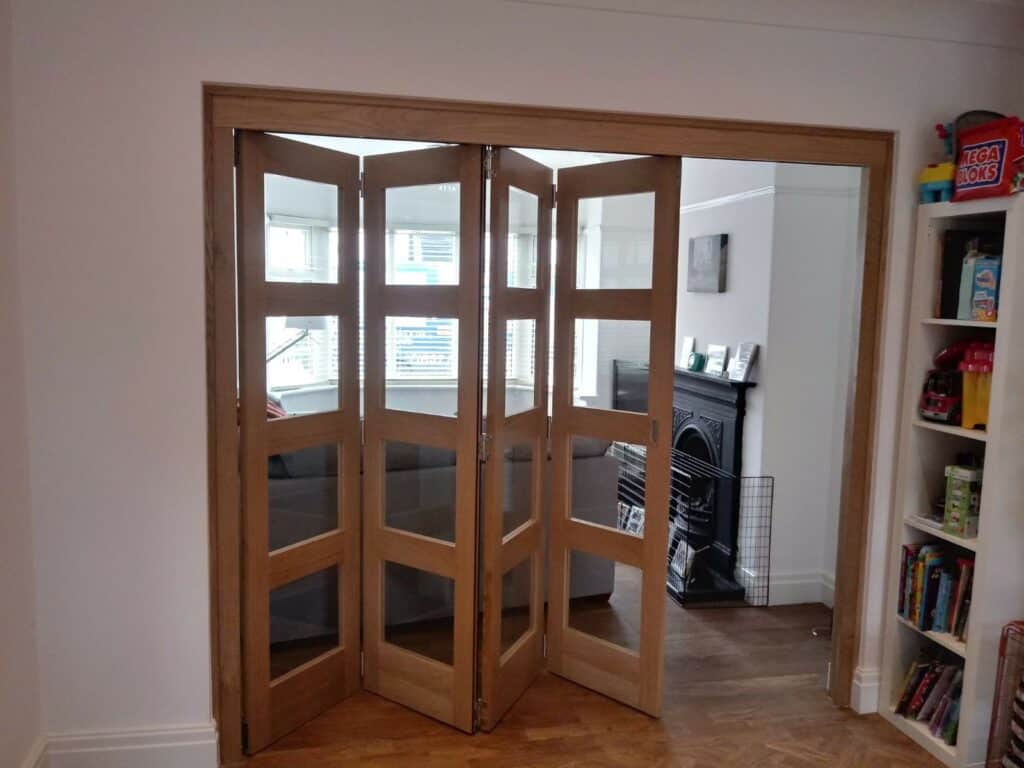
Bifold doors comprise multiple panels, typically ranging from three to six, that fold and stack against the side of the opening. This innovative design creates a seamless transition between interior and exterior spaces, maximising light infiltration and creating flexibility in your home’s layout.
The sophisticated folding mechanism requires precision engineering and manufacturing expertise. Each panel must align perfectly with its neighbour, and the hardware must operate smoothly under regular use. This complexity is a primary driver of bifold door costs compared to their French door counterparts.
The mechanical components of a bifold door system are substantially more complex than traditional French doors. Each panel requires individual hinges, and the system needs:
These components demand precision manufacturing and expert assembly. Any minor misalignment can compromise the entire system’s performance, requiring skilled craftspeople to ensure flawless operation. At Reddish Joinery, our team invests considerable time in every bifold door installation, guaranteeing optimal functionality and longevity.
Bifold doors typically consume more timber than French doors due to the number of panels involved. A bifold door system with five or six panels requires significantly more material than a two-panel French door set. Additionally, the structural requirements are more demanding; the timber frame must be robust enough to support the weight of multiple panels and withstand the stress of repeated opening and closing cycles.
The hardware components add considerable material cost as well. Quality tracks, hinges, and locking mechanisms from reputable manufacturers represent a substantial portion of the overall bifold door expense. Inferior hardware can result in operational issues, so investing in premium components is essential for long-term satisfaction.
The size of your opening significantly impacts costs for both door types, but in different ways. French doors are typically available in standard sizes, which helps keep costs predictable. If your opening falls within standard dimensions, you’ll benefit from lower pricing. Bespoke sizing increases expenses but usually remains relatively modest.
Bifold doors, however, scale dramatically with opening size. Larger openings require additional panels, more complex tracking systems, and heavier-duty hardware. A bifold system spanning 4 metres will cost substantially more than one covering 2 metres, the difference is more pronounced than with French doors. This is an important consideration if you’re planning to create expansive glazed areas opening onto your garden or patio.
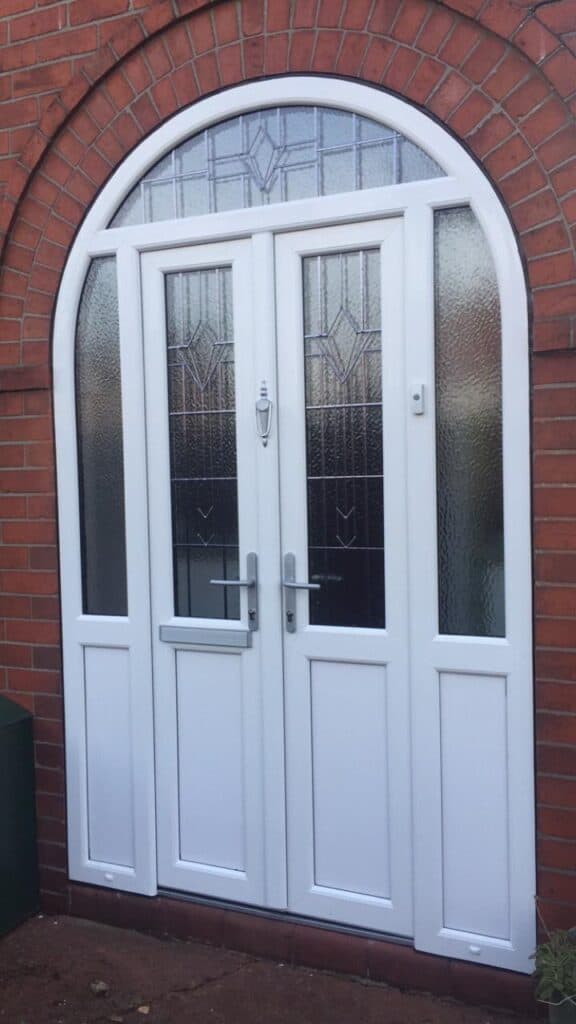
Both French doors and bifold doors offer various glazing options, and these choices significantly influence your final cost.
Double glazing vs triple glazing: Standard double glazing is included in most modern door systems, but triple glazing, offering superior thermal efficiency, commands a premium. This extra cost applies equally to French and bifold options, though the overall impact is more noticeable on bifold systems simply because they feature more glass area.
Specialist glass types: Toughened glass, laminated glass, and low-emissivity (Low-E) coatings all increase expense. Frosted or decorative glazing patterns add further cost, particularly for French doors where decorative glazing is more common.
Glazing bar options: For French doors, choosing decorative muntin patterns or additional glazing bars increases manufacturing complexity and cost. Bifold doors typically feature simpler glazing, usually one large pane per panel, so this cost factor is less relevant.
At Reddish Joinery, we can advise on glazing options that balance performance, aesthetics, and budget considerations, ensuring you achieve optimal value from your investment.
The hardware specification represents a significant cost differentiator between these door types.
French doors typically use standard hinges and a simple locking mechanism – often a traditional mortice lock or modern espagnolette lock. These are cost-effective and reliable, contributing modestly to the overall price.
Bifold doors require considerably more sophisticated hardware. Multi-point locking systems, heavy-duty hinges, tracking mechanisms, and soft-close dampers all add expense. Premium bifold door systems may include automated soft-close features or integrated blinds between the glazing panes, luxuries that come with corresponding cost implications.
As you can see, there are lots of things to consider when cost-planning for a new door installation. To find out more call Reddish Joinery on 0161 969 7474 or contact us online.
The front door of your property does far more than simply provide a point of entry. It serves as the...
Read More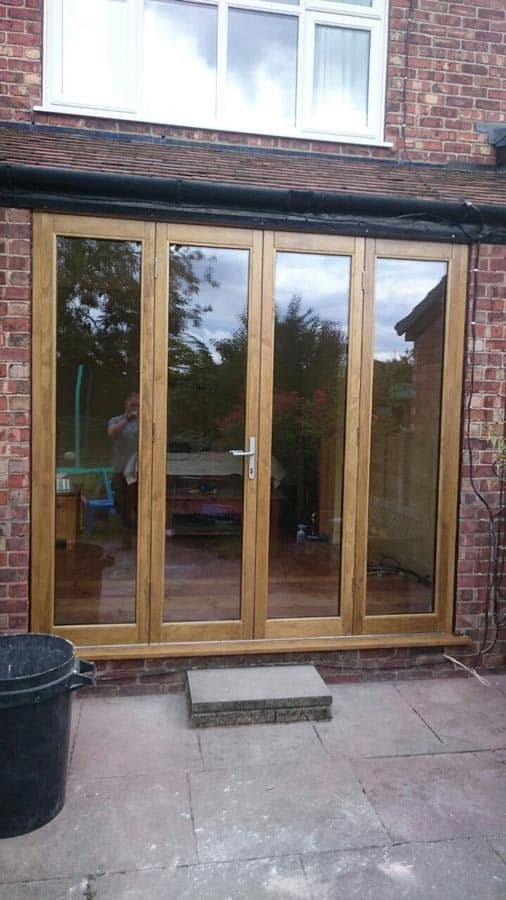
Timber bi folding doors give you the warmth of natural wood, the practicality of a wide-opening external door system, and...
Read More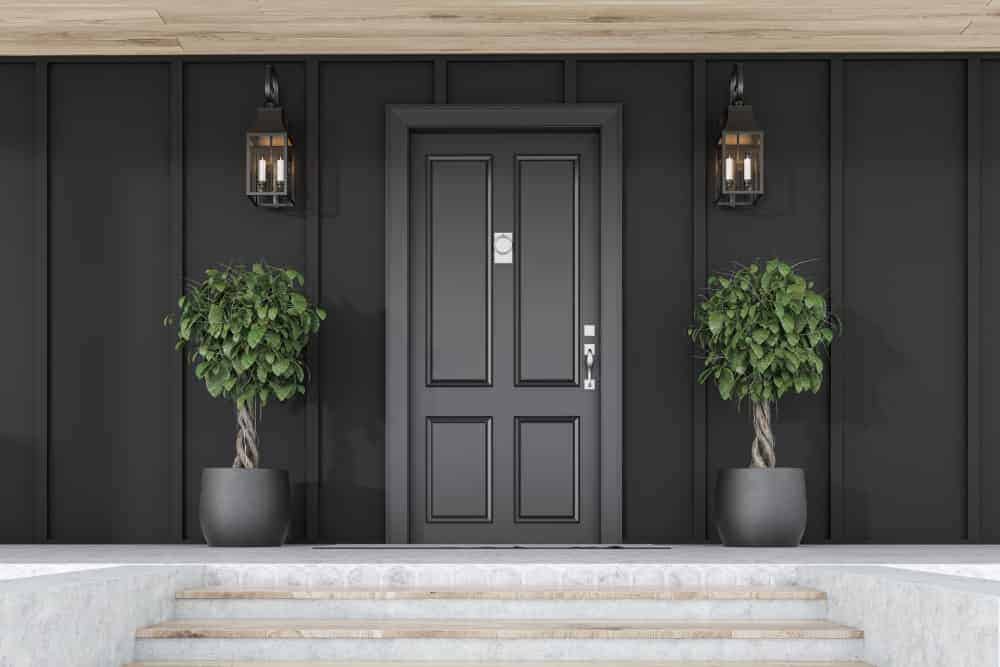
There are no specific regulations for doors in people’s homes in the UK, but there are general building regulations that...
Read More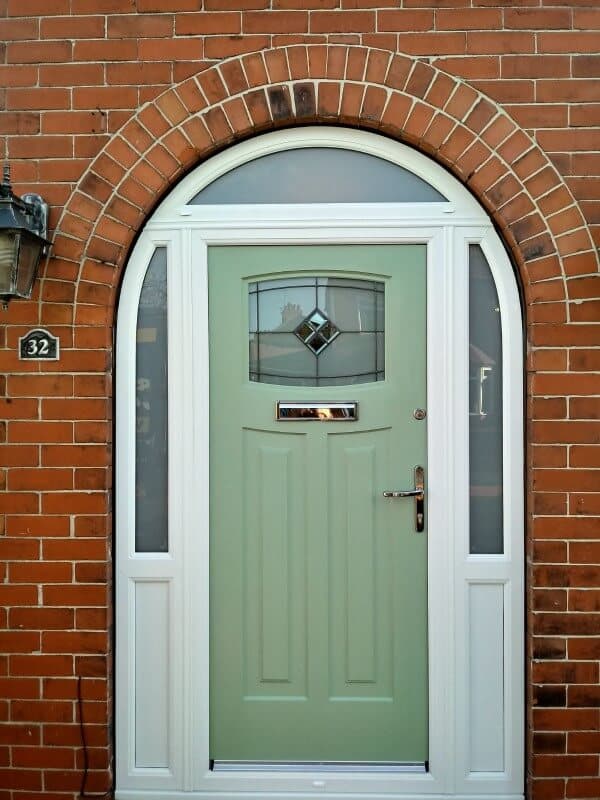
When we speak to our customers, they often inform us of the many home improvement projects they’re looking to complete...
Read More